The self-audit takes about five minutes. No email required to see your result.The self-audit takes about five minutes.
Valentia
Perimenopause

Why am I growing facial hair in menopause?

CommonAndrogen ratioHarmless

A wiry hair at the chin where there was down. Another at the jaw. New facial hair is one of the most common and least discussed arrivals of the transition, and the mechanism is a ratio, not a malfunction.

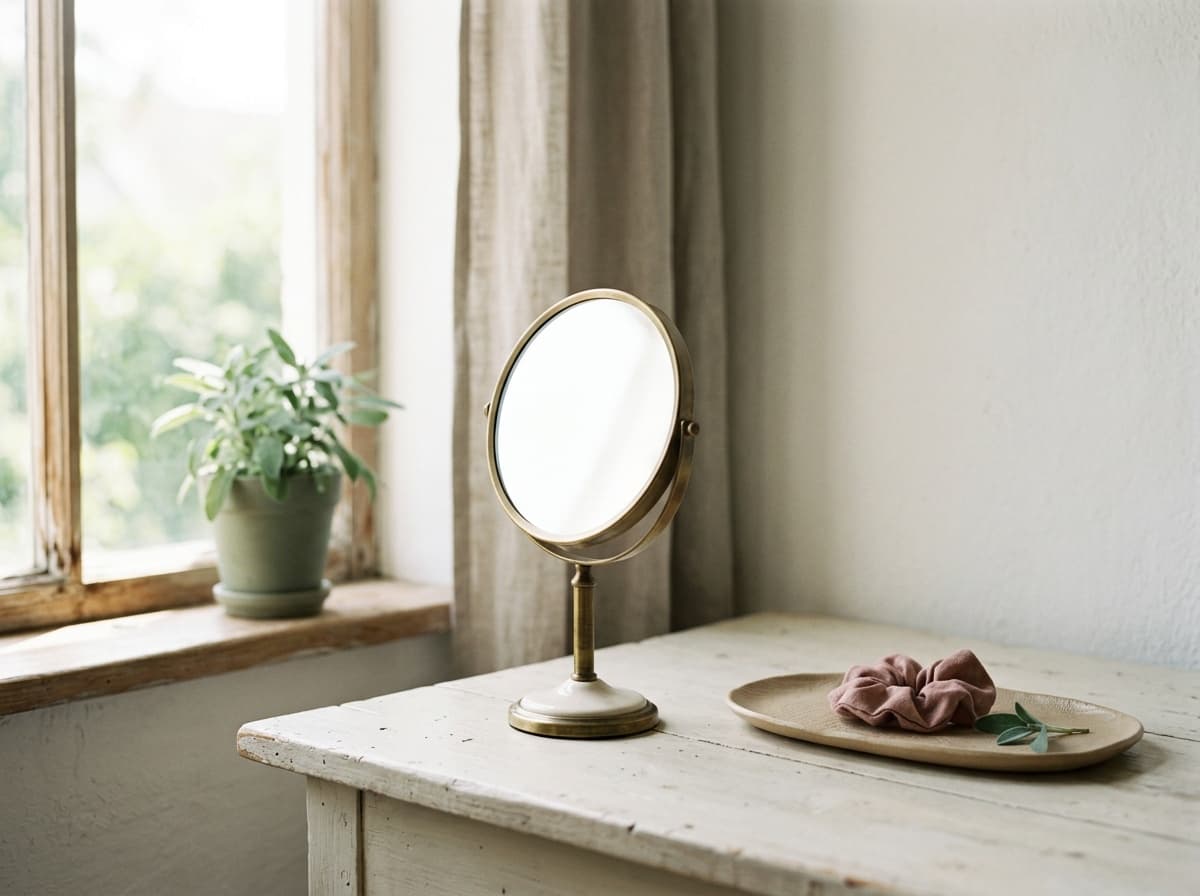
A small magnifying mirror in window light
Tonight, in three steps
  1. Remove it however you like. Tweezing does not make it grow back thicker
  2. Note when you first saw it, and how fast it arrived
  3. Good light and a magnifying mirror, so you are not doing this by feel
Jump to what I would do first

39%

of post-menopausal women in a population study reported facial hair gain after the menopause

Ali and Wojnarowska, Br J Dermatol, 2011

32%

reported new growth on the chin, the most frequent single site

Ali and Wojnarowska, Br J Dermatol, 2011

15

is the Ferriman-Gallwey score above which blood tests are usually done; below it, hirsutism is diagnosed clinically

DermNet, Hirsutism
The short answer

Oestrogen falls faster than testosterone does, so the ratio tilts and follicles that were always androgen-sensitive finally respond.

You grow facial hair because oestrogen falls steeply while androgens decline more slowly, so the ratio between them shifts. Follicles on the chin and upper lip have always been the most androgen-sensitive on a woman's face, and fine hairs there turn into thicker, pigmented ones. Two in five women report it.

Hair follicles at what are called secondary hair sites, the chin, upper lip, jaw and neck, are more sensitive to androgens than follicles elsewhere. They always were. What changes in the transition is the ratio: oestrogen falls steeply around the final period, androgen production declines more gradually, and the ratio those follicles respond to shifts. Under androgen influence, small vellus follicles that produced tiny, almost invisible hairs enlarge and start producing bigger pigmented hairs. Nothing new has appeared. Existing follicles have changed what they make.

This is common enough to be ordinary. In a population-based study of post-menopausal women, 39% reported gaining facial hair, and the chin was the most frequent site at 32%. The same study found two distinct patterns of hair change: diffuse scalp thinning that travelled with body hair loss and older age, and frontal hair loss that travelled with higher facial hair scores at a relatively younger age. A New Zealand clinical reference puts it plainly, that facial hirsutism is very common in post-menopausal women not taking hormone therapy.

The version that needs a doctor is different, and the difference is speed and company. Hirsutism that comes on quickly, or arrives alongside a deepening voice, balding at the temples, acne, increased muscle bulk or a decrease in breast size, points at a larger androgen excess rather than the ordinary shift, and that is investigated. Clinical guidance is that hirsutism is diagnosed clinically and blood tests are not usually needed unless the score is above fifteen on the standard scale or there are signs like those.

The usual causes
oestrogen falling faster than androgensfollicles that were always androgen-sensitivefamily patterninsulin resistance in some womensome medicinesless commonly, a treatable hormonal cause
What you need to know

TLDR, if you are in a rush.

This is common, not a sign that something is wrong. Two in five women in a population study reported gaining facial hair after menopause, and the chin was the most frequent site.

The mechanism is a ratio, not a surge. Oestrogen falls faster than androgens do, and follicles on the chin and lip were always the most androgen-sensitive ones you had.

Removing it does not make it worse. Tweezing, shaving, waxing and threading do not change what a follicle produces, whatever you were told at fifteen.

Light-based removal targets pigment in the hair, so it suits dark terminal hair. No method available today gives lifelong permanent removal, so plan for maintenance rather than a cure.

See a GP if it arrived quickly, or if it comes with a deepening voice, hair loss at the temples, acne, increased muscle bulk or breast change. That combination is investigated rather than watched.

Before tonight

Four things to settle before you try anything.

01

Your timeline

Write down when you first noticed it and how fast it came. Gradual over a year or two, alongside other changes of the transition, is the ordinary version. Noticeable change over a few months is the version that gets tested, and the date is the single most useful thing you can bring to an appointment.

02

Your company

Look at what else is happening. Voice deepening, thinning at the temples, new acne, more muscle, a change in breast size or an enlarging clitoris are the signs that move this from cosmetic to clinical. Any of them together with new hair is a GP appointment rather than a beauty question.

03

Your family

Hirsute patterns are usually genetically determined, and it is worth asking the women in your family what happened to them and when. That history is context a clinician will ask for, and it is often reassuring.

04

The permission

You are allowed to remove it. There is no medical reason to leave it, no method of removing it makes it grow back thicker, and the psychosocial cost of unwanted hair is documented in the clinical literature rather than dismissed by it.

Searching moments

When women go looking for this.

Three dark hairs on the chin, out of nowhere

The most common version, and the most common site: 32% of women in the population study reported new chin growth. Remove them however you like and get on with your day.

It arrived fast, and my voice sounds different

That is the combination that gets investigated. Fast onset with signs like voice change, temple balding, acne or increased muscle bulk points at a larger androgen excess, and a GP will want bloods.

Hair leaving my head and arriving on my chin

That pairing is documented. The population study found frontal hair loss travelled with higher facial hair scores, in relatively younger women, as a distinct pattern from diffuse thinning.

I have been told plucking makes it worse

It does not. Nothing about removing a hair changes what the follicle produces. What changed is the hormonal ratio those follicles sit in.

Common misconceptions

What women get wrong about it.

Assumption

Plucking or shaving makes hair grow back thicker and darker.

Reality

It does not. A cut hair has a blunt end so it feels coarser, and a new hair emerging is at its full colour rather than sun-faded. The follicle has not been told anything.

What to do instead

Remove it by whatever method suits you and the site. This myth costs women years of leaving hair they did not want.

Assumption

This means my hormones are dangerously out.

Reality

Two in five women report it after menopause, and clinical guidance is that hirsutism is diagnosed clinically without blood tests unless the score is high or there are signs of virilisation.

What to do instead

Note the speed and the company it keeps. Slow and alone is ordinary. Fast, or with voice, hair loss, acne or muscle change, gets tested.

Assumption

Laser will get rid of it permanently.

Reality

A review of hair removal is explicit that no method of lifelong permanent eradication is currently available, and that patients need realistic expectations. Evidence supports reduction, with longer-term results after repeated treatments.

What to do instead

Plan for a course and then maintenance. Ask any clinic what their maintenance schedule looks like before you pay for a package.

Assumption

Laser works on any hair.

Reality

Light-based removal works by heating melanin in the follicle and hair shaft, so the ideal candidate has thick, dark, terminal hair. White and grey hair carry far less of that target.

What to do instead

For dark hair, laser or intense pulsed light are reasonable. For grey or white hair, ask about electrolysis, which treats follicles individually, or stay with tweezing and threading.

Assumption

A cream from the pharmacy will stop it.

Reality

Prescription options exist, including a cream that slows facial hair growth in some countries and hormonal treatments a GP can prescribe, and none of them is an over-the-counter fix.

What to do instead

If you want a medical route rather than removal, that is a GP conversation. Ask what is available where you live and what the side effects are.

Assumption

It is vain to be upset about it.

Reality

Clinical references note that people affected by excessive hair may suffer great embarrassment and go to considerable lengths and expense to remove it. It is a recognised effect, not a character failing.

What to do instead

Treat it as practically as you would any other symptom: remove it, check the flags, and stop paying it emotional rent.

What I would do first

In this order, for this reason.

Four moves. The first is a two-minute check that decides whether the rest of this page is cosmetic or clinical.

Run the flag check before anything else

Ask two questions. Did it arrive over months rather than years. Is anything else changing in the same direction: voice deepening, hair thinning at the temples, new acne, increased muscle bulk, a decrease in breast size. If yes to either, book a GP appointment and take your dates with you. If no to both, this is the ordinary version and everything below applies.

Tonight, and it decides the rest

Remove it in whatever way suits the site

Tweezing and threading for a few chin hairs, shaving where it is broader, waxing if you tolerate it. None of these changes the follicle. Good light and a magnifying mirror matter more than the tool: most of the frustration women describe is from doing this by feel in a bathroom mirror. Take care around skin that is already dry or reactive, and moisturise afterwards.

Immediate, and repeatable

Match the longer-term method to the hair colour

Light-based removal heats melanin in the hair, so dark terminal hair responds and white or grey hair carries little of the target. Electrolysis treats one follicle at a time and does not depend on colour. Expect a course of treatments and then maintenance, because no method available now is permanent.

Months, with maintenance after

Take the medical route to a GP rather than a counter

Hormonal treatments exist and are prescribed rather than bought, and what is available differs by country. If the hair is extensive, or if it is distressing enough to be worth medication, that is a legitimate reason for an appointment on its own.

One appointment, then a decision
This month

The habits that change the baseline.

Not much maintenance is needed here. These are the things that keep it from becoming a daily preoccupation.

A proper mirror and proper light

A magnifying mirror by a window, used once a week, replaces the daily scanning in the car mirror that costs women far more time and mood.

A set time, not a constant watch

Once or twice a week, deliberately, rather than whenever you catch sight of yourself. This is the difference between a task and a preoccupation.

Moisturise the area afterwards

Chin and upper lip skin in this decade is drier than it was, and repeated removal on a thin barrier leaves it red and bumpy. Plain unperfumed cream after, not an astringent.

Watch the sun on treated skin

Skin that has been waxed, lasered or treated is more sun-sensitive for a while, and this is a face you are already protecting for other reasons.

Keep the dates if anything accelerates

A short note of when things changed is the difference between a vague appointment and a useful one.

Look after the metabolic side if it applies to you

Androgen excess is often associated with insulin resistance, and clinical guidance names weight and dietary management where that is the picture. That is a whole-health matter rather than a beauty one.

Research notes

Source-backed signals for this page.

Each line is a specific figure or finding, with where it came from. Nothing on this page is guessed.

In a population-based study of post-menopausal women, 39% reported facial hair gain, with the chin the most frequent site at 32%.

Ali and Wojnarowska, Br J Dermatol, 2011

The same study reported diffuse scalp hair loss in 26% and frontal hair loss in 9%, and found frontal loss associated with higher facial hair scores at relatively younger ages.

Ali and Wojnarowska, Br J Dermatol, 2011

Facial hirsutism is described as very common in post-menopausal women not taking hormone therapy.

DermNet, Menopause and the skin, reviewed 2024

Follicles at secondary hair sites are more sensitive to androgens, and under androgen influence small vellus follicles enlarge into follicles producing bigger pigmented hairs.

DermNet, Hirsutism

Hirsutism is diagnosed clinically, and investigations are not usually necessary unless the Ferriman-Gallwey score is above 15.

DermNet, Hirsutism

Signs of virilisation that prompt investigation include a deepening voice, balding, acne, decreased breast size, clitoral enlargement and increased muscle bulk.

DermNet, Hirsutism

Light-based hair removal works by photothermal destruction of the follicle, targeting melanin in the follicle and hair shaft, and the ideal candidate has thick dark terminal hair.

Haedersdal and Haak, Curr Probl Dermatol, 2011

No method of lifelong permanent hair eradication is currently available, and evidence supports reduction, with longer-term results after repeated treatments with certain lasers.

Haedersdal and Haak, Curr Probl Dermatol, 2011

The studies

The research behind the advice.

Not testimonials. The studies that give the moves above their standing, with what was tested and what was found.

01 · Br J Dermatol 164(3), cross-sectional population study, 2011

What actually happens to hair after menopause

What was tested
The subjective experience of scalp, facial and body hair change in post-menopausal women.
How
Post-menopausal women aged 45 or over of northern European origin completed a questionnaire on hair change, with women who had thyroid disease, ovary removal or premature menopause excluded so that ordinary change could be seen on its own.
What was found
39% reported facial hair gain, the chin most often at 32%. Diffuse scalp hair loss was reported by 26% and frontal loss by 9%. Two patterns emerged: diffuse loss travelling with body hair loss and older age, and frontal loss travelling with higher facial hair scores at younger ages.
What it means for you
This is the number that makes the page. Two in five is ordinary, and the head-and-chin pairing that women find so strange is a documented pattern.
View source

02 · Curr Probl Dermatol 42, review, 2011

What hair removal can and cannot promise

What was tested
The evidence for optical hair removal methods, their mechanism and their limits.
How
A review of the devices used for hair reduction, the wavelengths involved, and the short and long-term efficacy evidence for each.
What was found
Removal works by heating melanin in the follicle and shaft, the ideal candidate has thick dark terminal hair and light skin, no method gives lifelong permanent eradication, and long-term evidence is stronger for some lasers than for intense pulsed light.
What it means for you
Read a clinic's promise against this. Reduction with maintenance is honest; permanent removal is not, and colour matters more than price.
View source
Comparison

Ordinary, or worth investigating?

Most facial hair in the transition is the ordinary version. The difference is speed and company, and it is worth knowing which you have before you worry about it.

The ordinary shiftWorth testing
How fastGradually, over a year or more, noticed rather than watched.Over months, fast enough that you can date it.
What else changedCycles, sleep, temperature, skin. The usual company of the transition.Voice deepening, balding at the temples, new acne, more muscle bulk, breast size decreasing.
WhereChin and upper lip, a few coarse hairs.Spreading across the face, chest, abdomen or back.
What happens nextNothing medical is required. Remove it if it bothers you.Blood tests to look at androgen levels and the cause behind them.
Who to seeNobody, unless you want a medical option for removal.A GP, with your dates written down.
Fit check

Who this page is for, and when to see a GP instead.

This will help if
  • coarse or dark hairs have appeared on your chin, upper lip or jaw over the last year or two
  • you are somewhere around or past the final period and other things have shifted as well
  • you want to know whether this needs checking before you decide what to do about it
  • you have been avoiding removal because you were told it makes hair grow back worse
See a GP instead when
  • the hair arrived over months rather than years, fast enough that you can date it
  • your voice is deepening, you are losing hair at the temples, or your muscle bulk has increased
  • there is new or worsening acne alongside it, or your breast size has decreased
  • hair is spreading to the chest, abdomen or back as well as the face
  • you have irregular or absent periods before your mid forties alongside the hair, which is worth investigating in its own right
  • you want a medical treatment rather than removal, which is prescribed rather than bought over a counter
By situation

The same rules, applied to your case.

A few chin hairs and nothing elseThe version most women have.

Nothing medical is needed. Remove them in whatever way suits you, in good light, on a weekly rather than a daily schedule. Moisturise afterwards, because this is drier skin than it used to be.

Then

If it stays gradual and stays local, there is nothing further to do here. Come back if the pace changes.

Hair going from your head and arriving on your chinThe pairing that feels like a bad joke.

It is a documented pattern rather than bad luck: the population study found frontal hair loss travelled with higher facial hair scores. Both sit on the same hormonal shift.

Then

Scalp hair loss has its own treatments and they work better started early, so it is worth raising with a GP rather than waiting to see how far it goes.

It came on fastMonths, not years.

Stop reading and book the appointment. Fast onset is the single most useful thing you can report, particularly alongside voice, muscle, acne or breast changes. It is usually not serious and it is checked because the treatable causes matter.

Then

Take your dates and any photographs. Blood tests are the next step and a GP can order them.

Grey or white hairs, and laser did nothingMoney spent and hair still there.

That is the mechanism rather than the clinic. Light-based removal heats melanin in the hair, and white or grey hair carries little of it. Electrolysis treats follicles one at a time and does not depend on colour.

Then

Ask any clinic what they expect on unpigmented hair before you buy a package, and get the answer in writing.

Chin hair and acne togetherCoarse hairs on the chin, and spots along the jaw.

One change arriving at two different follicles. Oestrogen falls faster than the androgens do, so the same shift shows up as a hair in one place and a breakout in another. It is not two problems and it does not need two unrelated routines, and treating the acne half with something stripping will not touch the hair half.

Then

The breakouts page covers the acne side, including what is reasonable to ask a GP about when both arrive together.

On menopausal hormone therapy (MHT, or HRT)And the hair still came.

Clinical references describe facial hirsutism as very common in post-menopausal women not on hormone therapy, which implies it is a factor rather than a guarantee. Prescriptions are given for symptoms, not for hair.

Then

If the hair is extensive or distressing, that is worth raising at your next review as its own item, because there are hormonal options aimed specifically at it.

The seven-day plan

One change a day, in the order they matter.

This one is short on purpose. A week is enough to decide whether this is cosmetic or clinical, and to set up a routine that takes ten minutes a week rather than ten minutes a day.

Day one

Write down when you first noticed it and how fast it came. Photograph the area in good light.

Day two

Run the flag check: voice, temples, acne, muscle bulk, breast size, hair spreading beyond the face. Any yes means an appointment.

Day three

Buy or find a magnifying mirror and put it somewhere with daylight. This is the tool that matters most.

Day four

Remove what is there, properly, in good light. Moisturise afterwards with something plain.

Day five

Ask the women in your family what happened and when. It is context, and it is often reassuring.

Day six

If you want a longer-term method, price a course honestly, and ask any clinic about hair colour and maintenance before you pay.

Day seven

Put a weekly ten minutes in the calendar and stop checking daily. If anything accelerates, the notes from day one are what make the appointment useful.

Questions

What women ask before they try this.

It is common. In a population study of post-menopausal women, 39% reported gaining facial hair and 32% reported new growth on the chin, which was the most frequent site. A New Zealand clinical reference describes facial hirsutism as very common in post-menopausal women not taking hormone therapy. Two in five is not a warning sign on its own.

Because the ratio changed rather than because androgens surged. Oestrogen falls steeply around the final period while androgen production declines more gradually, and the follicles on your chin and upper lip were always the most androgen-sensitive ones you had. Under androgen influence, fine vellus hairs there enlarge into thicker pigmented ones.

No. Nothing about removing a hair changes what the follicle produces. A cut hair has a blunt tip so it feels coarser, and a new hair is at full colour rather than sun-faded, which is where the myth comes from. Remove it however suits you.

For dark terminal hair, yes, as reduction rather than cure. It works by heating melanin in the follicle and hair shaft, so the ideal candidate has thick dark hair. A review of the field is explicit that no method of lifelong permanent eradication is currently available, so plan for a course and then maintenance.

Light-based methods have little to target in unpigmented hair. Electrolysis treats each follicle individually and does not depend on colour, which is why it is the usual answer for grey. Tweezing and threading remain perfectly reasonable and cost nothing.

Removal and prevention are two questions. For removal: tweezing and threading cost nothing and do not make hair grow back thicker, laser reduces dark terminal hair over a course, and electrolysis treats each follicle and works regardless of colour. For stopping it, a review of hair removal is explicit that no method of lifelong permanent eradication is currently available, so plan for maintenance rather than a cure. Slowing the driver itself is a prescription conversation, not a hair removal one.

Not on its own. In the population study behind this page, women reported gaining facial hair after the menopause rather than losing it, and a follicle that has switched to producing a coarse terminal hair keeps producing one unless it is treated. What does change is that it stops feeling like a new development and becomes a maintenance job, usually a few minutes a fortnight. That is why the practical answer is a removal method you are content to repeat.

When it came on over months rather than years, or when it arrives with a deepening voice, hair loss at the temples, new acne, increased muscle bulk or a decrease in breast size. Clinical guidance is that hirsutism is diagnosed clinically and blood tests are not usually needed unless the score is high or those signs are present.

Androgen excess is often associated with polycystic ovaries and insulin resistance, and there are rarer causes including some medicines and adrenal conditions. That is precisely what a GP is checking for when the picture is fast or unusual. It is also why the ordinary, gradual version does not need testing.

It is described as very common in women not taking hormone therapy, which suggests a role, but it is prescribed for symptoms rather than for hair. If the hair is extensive or distressing, raise it as its own item at a review, because there are treatments aimed specifically at it.

Keep reading

Related symptoms, and the article that goes with this one.

References

Sources used on this page.

Every figure and finding above traces to one of these.

Physiological changes in scalp, facial and body hair after the menopause: a cross-sectional population-based study of subjective changes

Ali and Wojnarowska, British Journal of Dermatology 164(3), 2011.

The 39% facial hair gain figure, the 32% chin figure, the 26% and 9% scalp hair loss figures, and the two patterns of hair change.

Hirsutism

DermNet, New Zealand, accessed September 2026.

Androgen sensitivity at secondary hair sites, vellus follicles enlarging into terminal ones, the Ferriman-Gallwey scale and the score above which tests are done, the signs of virilisation, the association with polycystic ovaries and insulin resistance, and the medical treatment options.

Hair removal

Haedersdal and Haak, Current Problems in Dermatology 42, 2011.

The photothermal mechanism targeting melanin in the follicle and hair shaft, the description of the ideal candidate, the absence of any lifelong permanent method, and the difference in long-term evidence between lasers and intense pulsed light.

Menopause and the skin

DermNet, New Zealand, reviewed October 2024.

Facial hirsutism described as very common in post-menopausal women not taking hormone therapy, and the note that around a third of post-menopausal women may develop scalp hair loss.

Skin, hair and beyond: the impact of menopause

Zouboulis et al., Climacteric 25(5), 2022.

The broader picture of skin and hair change across menopause, as background to this page.

Written by Davina Hearne, 6 September 2026.

Davina Hearne qualified in 2012 at Wellpark College of Natural Therapies in New Zealand, with three NZQA Level 6 diplomas taken together over three years: Naturopathy, Herbal Medicine and Nutrition.

Davina Hearne is a New Zealand qualified naturopath, herbalist and nutritionist. She is not a medical doctor. This is health education from a qualified non-physician practitioner. It is not medical advice and does not establish a practitioner relationship.

Start tonight

Do the flag check tonight, then remove it and stop thinking about it.

Two questions decide everything here: did it come on over months rather than years, and is anything else moving in the same direction. If the answer to both is no, this is the ordinary version that two in five women report, and the only remaining decision is which removal method suits your hair colour and your patience. If either answer is yes, write down your dates and book an appointment this week.

Free, by email

The 3am wake, five days by email.

Whatever brought you here, sleep is where Davina starts with everyone. One short email a day, beginning with why you wake and what to change first.

Your bag

Your bag is empty. The Serum Set is the place most women start.