Aloe vera, honestly.
What it genuinely does, what it does not, and why most of the bottles on the shelf are mostly not aloe.
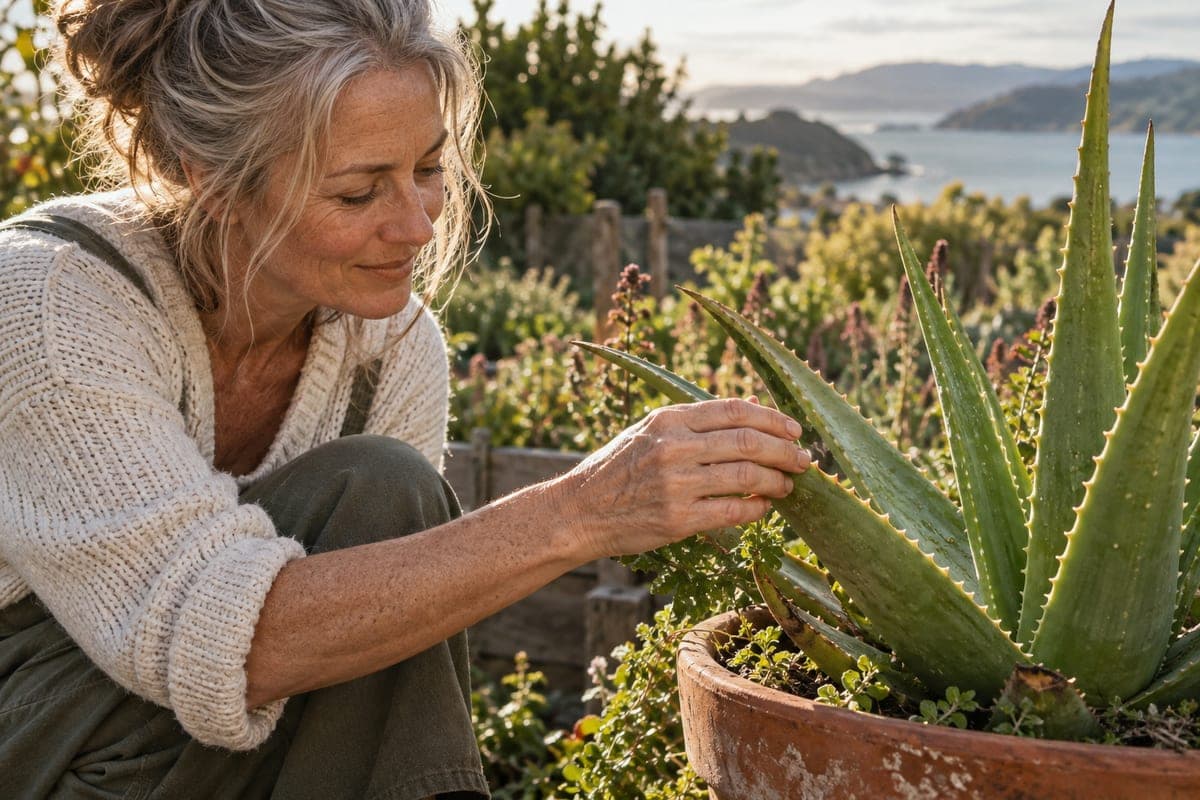
Aloe has been used for burns and irritated skin for a very long time, and unusually for a folk remedy, the reason holds up. The gel from the leaf is rich in polysaccharides, acemannan among them, which support wound healing and calm inflammation, alongside a mild humectant effect that draws water towards the surface. For hot, angry, reactive skin, it does something real.
Where it earns its place in this decade is the flare. Perimenopausal skin runs reactive: the barrier is thinner, histamine runs higher, and the transition supplies heat from both flushes and broken sleep. That produces days when skin stings at products it tolerated last month, and nights when the itch arrives after lights out. Aloe is what I reach for on those days, and cold aloe from the fridge is better than room-temperature aloe, because cooling settles itch signalling on its own.
Now the part that will change what you buy. Turn the bottle around. A great deal of what is sold as aloe vera gel is water first, then a thickener, then denatured alcohol, then green dye, with aloe somewhere down near the preservative. That formula is worse than useless on a worked-up barrier: the alcohol dries the exact tissue you are trying to calm, and the dye is an unnecessary sensitiser on skin that is already reacting to things.
“Aloe is not green. If the gel in the bottle is green, you are looking at dye, not plant.”
So: aloe leaf juice should be at or near the top of the ingredient list, not near the bottom. There should be no alcohol and no colour. A good one is aloe juice, glycerin, a gum to thicken it and a mild preservative system, and it is the colour aloe actually is, which is to say nearly clear. That is also why the good ones are unexciting to look at.
One more thing worth knowing, since it explains a word on some labels. Between the gel and the leaf rind sits a bitter yellow latex containing aloin, which is a strong laxative and an irritant. Good manufacturing removes it, and you will sometimes see this described as decolourised or purified aloe. It is also why cutting a leaf from the plant on your windowsill and applying the raw sap is not automatically gentler than a properly made product.
What aloe will not do, because the marketing overreaches. It does not build collagen, it does not undo sun damage, and it will not treat the structural changes of the transition. It is a soothing step, not a treatment step. And it is a plant in the lily family, so genuine aloe allergy exists: patch test inside the elbow for a couple of nights before you put it on an already angry face. If a rash is spreading, persistent, or blistering, that is a doctor's problem, not a gel's.
Davina Hearne, Naturopath (Diploma, NZ) · Founder, Valentia
Educational only. Always speak to your healthcare provider about your symptoms and before starting a new supplement.